
Collaborative automation has transformed the way companies approach production, assembly and handling. Among the leaders in this revolution, Universal Robots (UR) has established itself as a benchmark for collaborative robots (cobots). Their ease of use, flexibility and safety have won over SMEs and large-scale industries alike.
But despite their popularity, several questions often come up when considering integrating a UR cobot into your work environment. How do they work without a cage? How much load can they handle? How easy are they to program? To help you better understand this technology and make informed decisions, we've put together the 15 most frequently asked questions about Universal Robots, with clear, up-to-date answers.
1. What makes a Universal Robots robot "collaborative"?
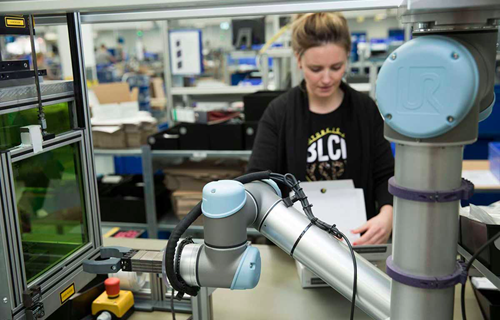
UR robots limit their force (up to 150 N) via an integrated safety controller. This enables safe interaction with humans, often without a cage, depending on the results of a risk analysis.
2. Can all applications be collaborative?
No. Although around 80% of UR applications work without a cage, some tasks (such as those involving sharp, heavy or hot objects) require additional safety measures.
3. Is a safety cage always necessary?
Not always. If the risk analysis shows that the forces, speeds and contacts are safe, the robot can operate without a cage. Otherwise, physical protection or other safety devices are required.
4. What training is required to program an UR robot?
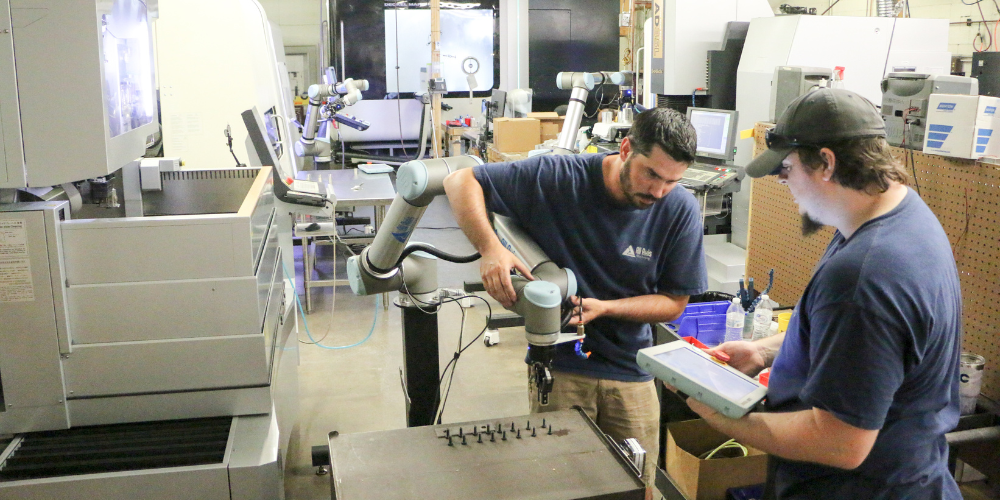
Very little. UR offers an intuitive touch-screen interface and a free e-learning platform. Many beginners can program simple tasks in just a few hours.
5. Can UR robots be easily moved and reused?
Yes. Their lightness and flexibility mean they can be quickly deployed on different work cells, without having to reprogram from scratch each time.
6. How long does it take to install a UR robot?
In general, a robot can be installed in less than a day, including mechanical attachment, initial programming and testing.
7. What is the lifespan of a UR collaborative robot?
With proper maintenance, a UR robot can operate for up to 35,000 hours, i.e. several years, even in continuous production.
8. What payload can an UR robot handle?
Models range from 3 kg (UR3e) to 30 kg (UR30). The choice depends on the task, the required reach and the type of gripper used.
9. How accurate are UR robots?
Repeatability ranges from ±0.03 mm to ±0.05 mm, making them ideal for assembly, batching, inspection or precise handling tasks.
10. Is it possible to integrate third-party tools (vision, grippers, etc.)?
Yes. UR offers an ecosystem called UR+, bringing together validated components (vision, gripping, welding, screwing, etc.) that are effortlessly compatible with UR robots.
11. Can the robot be connected to a PLC or MES system?
Yes. UR robots communicate via Modbus TCP, Profinet, Ethernet/IP, ROS, OPC UA, etc., facilitating integration into existing automation systems.
12. Are UR robots compatible with harsh industrial environments?
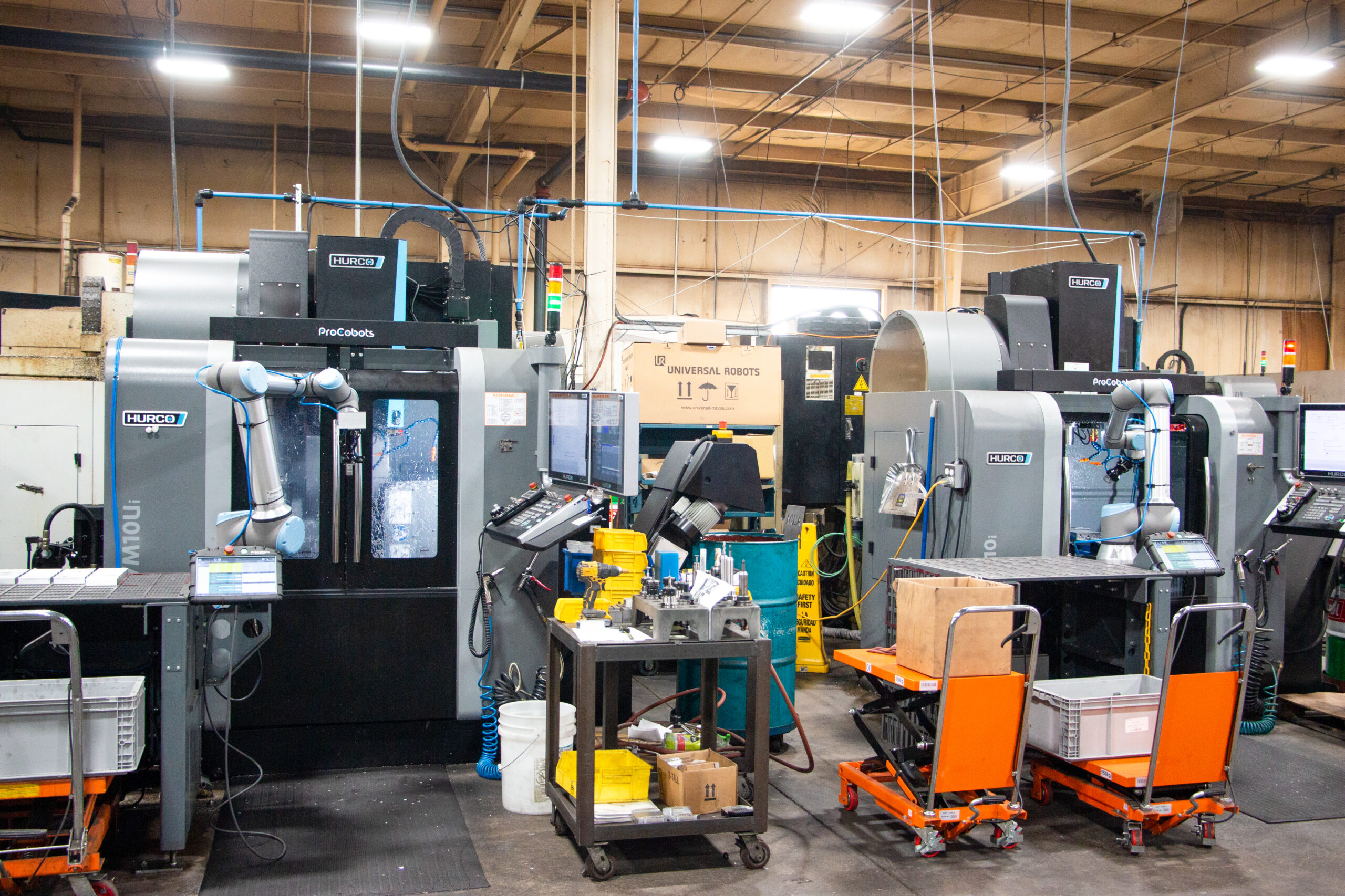
UR robots are not IP67-rated as standard. Protective covers or options can be added for dusty or damp environments.
13. What software is included with UR robots?
PolyScope software enables programming via an intuitive touch interface. Regular updates add new features and improve ergonomics (e.g. PolyScope X).
14. Which sectors use UR robots?
They are used in the automotive, food, electronics, pharmaceutical, plastics and metalworking industries. Their versatility makes them accessible to SMEs and large groups alike.
15. What is the typical return on investment (ROI)?
The average ROI is often less than 12 months, thanks to gains in productivity, quality and reduced labor and accident costs.
Universal Robots collaborative robots offer much more than simple automation: they reduce costs, improve quality, increase flexibility and, above all, involve operators in a smooth and safe technological transition. By better understanding their capabilities and limitations, you'll be able to better plan your automation projects and maximize your return on investment.
Whether you're just starting to think about it, or ready to take action, these frequently asked questions will give you the grounding you need to make your robotic integration a success.
Do you need advice?